

What's new · v0.1.79
Ask the semantic model in your platform's SQL
The semantic query compiles level, time-series and dimension-rule metrics in the dialect of the Domain's platform: DuckDB, MotherDuck, Microsoft Fabric, Databricks or Snowflake.

A compiled query used to come back in one dialect. It now comes back in the dialect of the platform the Domain runs on.
Ask for a governed metric
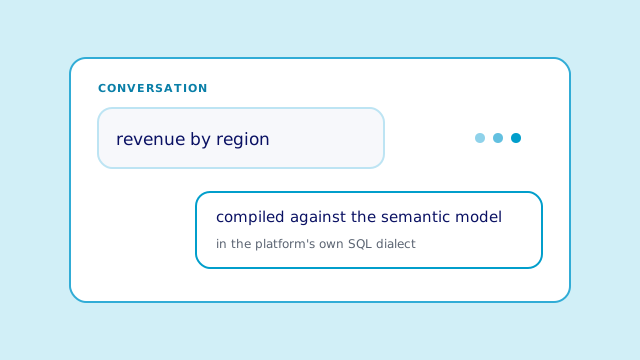
Ask for a governed metric in the conversation. Ask in the conversation. The semantic query reads the Domain's canonical semantic model and compiles the question against the metrics, entities and join keys the model declares.
Let the model compile it
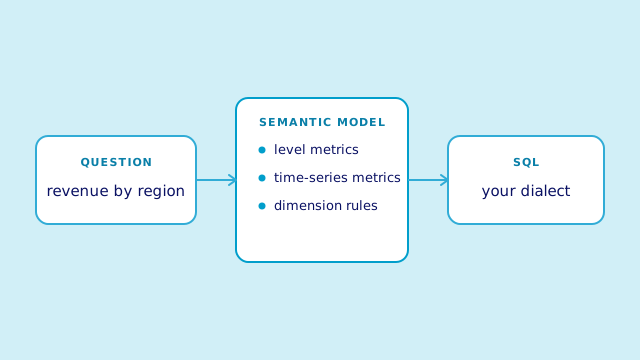
The semantic model compiles the question in your platform's dialect. The compiler handles level, time-series and dimension-rule metrics and writes the SQL in the platform's dialect: DuckDB, MotherDuck, Microsoft Fabric, Databricks and Snowflake. A platform without a mapped dialect is refused with a reason.
Read the SQL before you run it
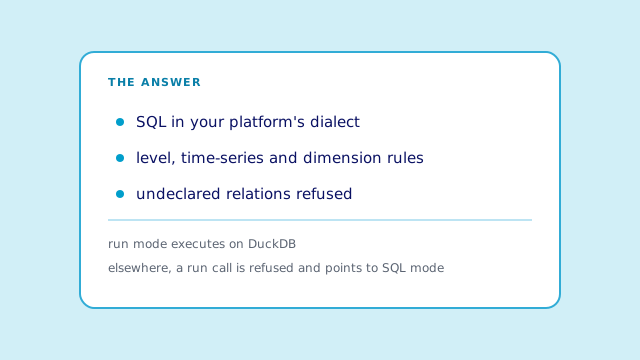
Read the SQL before you run it. Use SQL mode to get the statement in the platform's dialect. Run mode executes on DuckDB. On any other platform a run call is refused up front and points you to SQL mode.


Before Write the query for one engine, then rewrite its functions and identifier rules for another.After Ask for the metric in SQL mode and get the statement in the target platform's dialect.
The SQL is readable before it reaches a dashboard. Start with one governed metric your team argues about.